

The 2025-26 NHL season has delivered one of the most competitive Stanley Cup races in recent years. The playoffs have already produced dramatic Game 7 finishes, coaching changes, breakout stars, and several franchises ending long postseason droughts. The conference finals are now set, with the Carolina Hurricanes facing the Montreal Canadiens in the East, while the Colorado Avalanche take on the Vegas Golden Knights in the West. Montreal advanced after a dramatic overtime Game 7 win against the Buffalo Sabres, while Carolina reached the conference finals after sweeping Philadelphia.
This postseason has also reflected how much the NHL continues to evolve. Teams like Buffalo and Anaheim returned to playoff relevance after years away, while franchises such as Colorado and Carolina continued building consistent contenders around elite core players. The defending champion Florida Panthers failed to qualify, proving again how difficult it is to stay on top in hockey. As the Stanley Cup chase intensifies, the current generation of stars is adding new chapters to the league’s long history of rivalries. But before today’s stars shaped the modern NHL, the league was defined by legendary player rivalries that elevated franchises, increased television interest, and pushed the sport into new eras.
Advertisement
MORE: Alex Newhook and Canadiens stun fans with ‘unbelievable’ OT win in Game 7

The rivalry between Wayne Gretzky and Mario Lemieux defined the NHL through the 1980s and early 1990s. Gretzky entered the league first and quickly became the face of hockey with the Edmonton Oilers, while Lemieux arrived in 1984 as the superstar savior for the Pittsburgh Penguins. Gretzky dominated with speed, vision, and record-breaking assists, while Lemieux brought size, scoring ability, and physical dominance.
Their rivalry became central to NHL marketing because fans constantly debated who was the better offensive player. Gretzky won four Stanley Cups with Edmonton, while Lemieux eventually led Pittsburgh to back-to-back championships in 1991 and 1992. Internationally, they also played together for Team Canada, which added another layer to the rivalry. Gretzky retired as the NHL’s all-time points leader, but many still believe Lemieux was the most naturally gifted player ever due to his production despite injuries and illness. Their competition helped the NHL gain more mainstream attention in North America.
Advertisement

Few rivalries changed the modern NHL more than Sidney Crosby versus Alex Ovechkin. Both entered the league in 2005 after the NHL lockout and immediately became the faces of a new era. Crosby represented the complete playmaker for Pittsburgh, while Ovechkin became the league’s most feared goal scorer with the Washington Capitals.
Their rivalry peaked between 2007 and 2018 as Pittsburgh and Washington repeatedly met in major playoff series. Crosby’s Penguins won three Stanley Cups during his era, while Ovechkin finally captured his first championship in 2018. Individually, Crosby built a reputation as one of hockey’s smartest all-around players, while Ovechkin chased historic goal-scoring records and eventually passed several legends on the all-time list. Their head-to-head matchups became national television events and helped rebuild NHL popularity after the lockout years. The rivalry also pushed both franchises into consistent championship contention for more than a decade.
Advertisement
Feel like posting a few other sports photographs today. Here’s Mr Hockey, Gordie Howe getting the best of Maurice Richard in a fight. pic.twitter.com/awBA72APUs
— BaseballHistoryNut (@nut_history) July 26, 2022
During the Original Six era, Gordie Howe and Maurice Richard represented two very different hockey identities. Howe starred for the Detroit Red Wings with his complete two-way game and unmatched durability. Richard became the symbol of the Montreal Canadiens through his scoring and emotional connection with French-Canadian fans.
Their rivalry stretched from the 1940s into the 1960s and shaped early NHL history. Richard became the first NHL player to score 50 goals in a season and the first to reach 500 career goals. Howe answered with six Hart Trophies and a career that lasted across five decades. Games between Detroit and Montreal carried massive intensity because both players symbolized championship hockey. Richard’s fiery personality contrasted with Howe’s toughness and consistency. Together, they helped transform the NHL into a major professional sports league in North America.

The 1990s introduced one of hockey’s greatest goaltending rivalries through Patrick Roy and Dominik Hasek. Roy built his legacy with the Canadiens and later the Avalanche, winning four Stanley Cups and becoming known for his playoff dominance. Hasek starred mainly with the Buffalo Sabres and later the Detroit Red Wings, using an unconventional style that frustrated opponents.
Advertisement
Roy relied on structure, positioning, and confidence, while Hasek played with unpredictable reflexes and athleticism. Their rivalry became a debate about style versus effectiveness. Roy won more championships, but Hasek captured six Vezina Trophies and two Hart Memorial Trophies, an extremely rare achievement for a goalie. Their playoff battles, especially during Colorado and Detroit’s heated rivalry years, helped define Western Conference hockey in the late 1990s. Many younger goalies modeled parts of their games after one of these two legends.

Bobby Orr revolutionized hockey from the blue line with the Boston Bruins, while Brad Park became his closest competitor during the late 1960s and 1970s. Park played mainly for the New York Rangers and later Boston, and many considered him one of the best defensemen ever. Unfortunately for Park, his prime overlapped with Orr’s dominance.
Advertisement
Orr changed expectations for defensemen by combining elite skating with offensive production. He won eight straight Norris Trophies and remains the only defenseman to win multiple scoring titles. Park was outstanding defensively and offensively, but he constantly finished behind Orr in award voting. Their rivalry still mattered because fans and media compared them every season. Games between Boston and New York gained extra attention because both players controlled the pace from the back end. Orr eventually became one of the most influential players in hockey history, but Park’s consistency ensured the rivalry remained competitive.

Mark Messier and Steve Yzerman led two powerhouse franchises through the late 1980s and 1990s. Messier helped the Oilers dynasty win multiple Stanley Cups before later captaining the New York Rangers to their historic 1994 championship. Yzerman became the long-term captain and leader of the Red Wings, eventually turning Detroit into a dynasty.
Advertisement
Their rivalry centered around leadership and playoff success. Messier played with intensity and physical edge, while Yzerman evolved from a pure scorer into a complete two-way captain. Messier guaranteed victory before Game 6 of the 1994 Eastern Conference Finals and delivered with a hat trick, creating one of hockey’s most famous moments. Yzerman answered later with three Stanley Cups in Detroit and one of the greatest captaincies in NHL history. Their rivalry highlighted how elite leadership could shape championship teams.

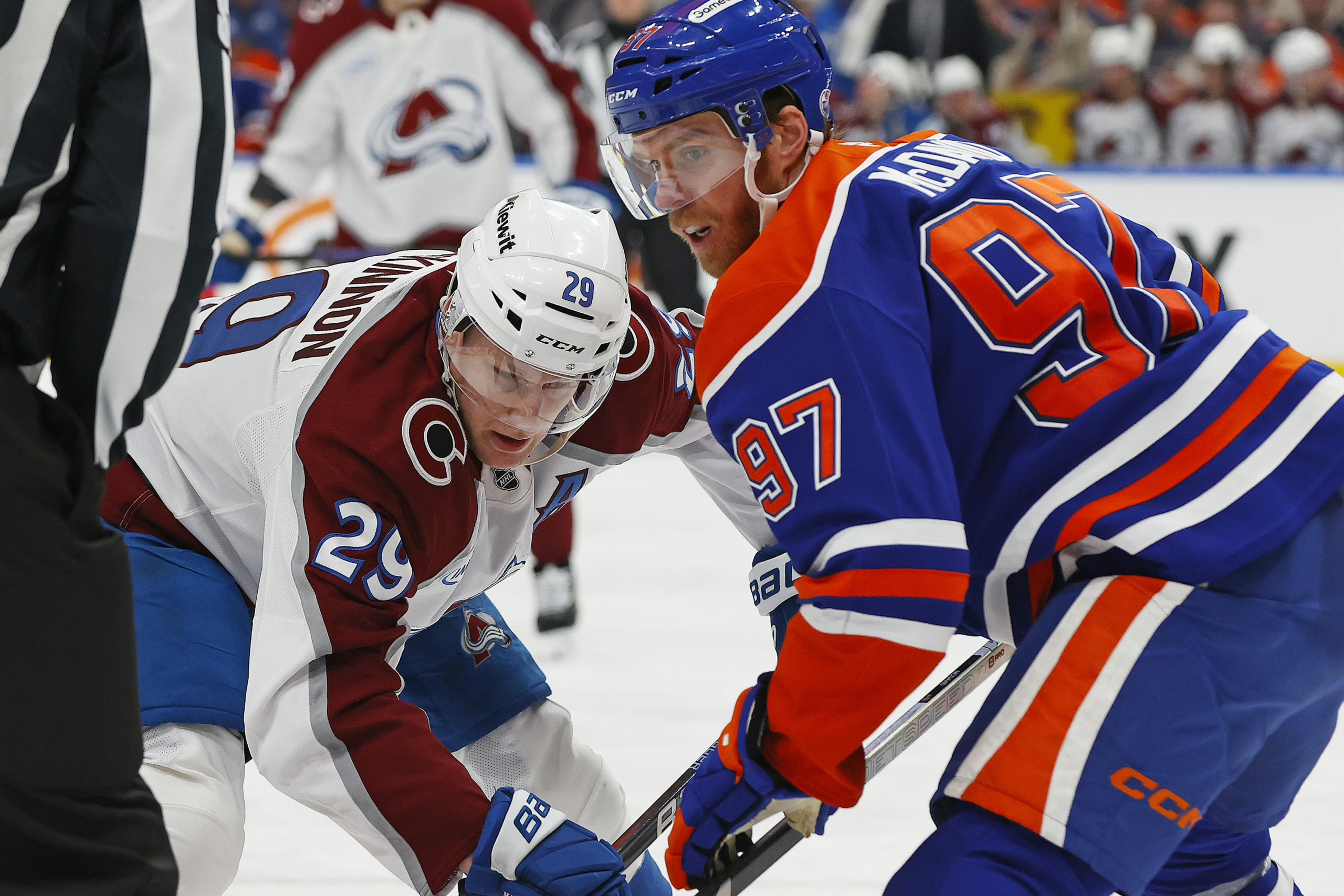
Connor McDavid and Nathan MacKinnon represent the NHL’s modern speed era. McDavid became the centerpiece of the Edmonton Oilers with unmatched acceleration and playmaking, while MacKinnon turned Colorado into a Stanley Cup contender through explosive offense and physical intensity.
Advertisement
MORE: Canadiens’ Alex Newhook embraces ‘Dangerous Team’ identity after Game 7 thriller
Their rivalry has grown throughout the 2020s as both players compete for MVP awards and playoff supremacy. MacKinnon led Colorado to a Stanley Cup in 2022, while McDavid continues chasing his first championship despite producing historic offensive numbers. Their playoff meetings have become must-watch hockey because both players can change games within seconds.
